The Rise of Agent Companies: How AI Teams Are Replacing Traditional Software
May 4, 2026 · 15 min read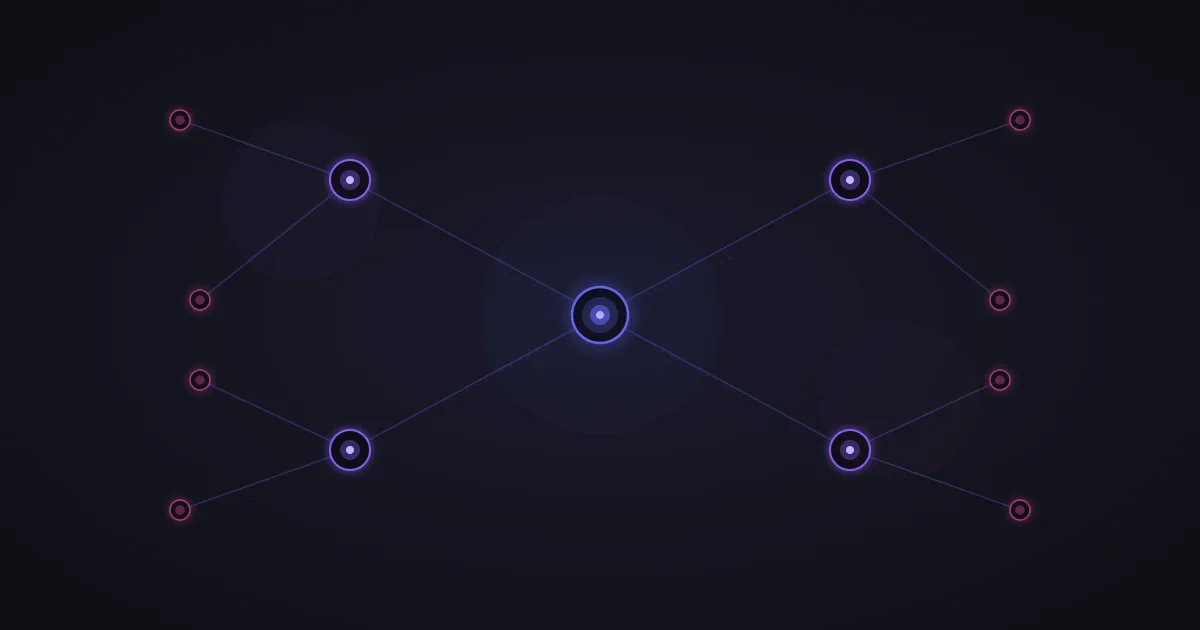
Something strange is happening in the software industry. Companies are no longer just buying tools or hiring contractors. They're standing up entire teams of AI agents — complete with org charts, reporting lines, and budgets — and deploying them as autonomous units. These aren't chatbot experiments or pilot programs. They're agent companies: a new organizational primitive that sits between traditional SaaS and traditional headcount.
The shift is significant because it represents a fundamental change in how work gets done. For the past two decades, the answer to "how do we scale?" has been either "buy software" or "hire people." Agent companies introduce a third option: deploy a team of agents that operates like a department, with specialization, coordination, and governance baked in from day one.
This article explores what agent companies are, why they're emerging now, how they differ from the multi-agent demos that have been circulating since 2024, and what the practical implications are for businesses deciding how to structure their work in 2026 and beyond.
In this article
- What is an agent company?
- Why agent companies are emerging now
- Anatomy of an agent company
- Agent companies vs. traditional SaaS
- Agent companies vs. human headcount
- The governance layer that makes it work
- Composability: agent companies as building blocks
- The economics of agent companies
- What agent companies can't do (yet)
- How to deploy your first agent company
- FAQ
1. What is an agent company?
An agent company is a team of AI agents organized with defined roles, hierarchy, and governance — designed to operate as a cohesive unit on a body of work. Each agent has a specific role (like CEO, engineer, or marketing officer), reports to a manager within a chain of command, and operates within boundaries set by budgets, permissions, and approval workflows.
The key insight: An agent company isn't just multiple agents in a system. It's agents organized the way humans organize — with structure, accountability, and the ability to coordinate without constant external direction.
Think of the difference between throwing five freelancers at a project and having a five-person team with a lead, clear roles, and established workflows. The freelancers might individually be talented, but without organizational structure, they'll duplicate work, miss handoffs, and produce inconsistent output. The team, by contrast, can self-coordinate because everyone knows their role, who to escalate to, and what the shared standards are.
Agent companies apply the same logic to AI. Rather than deploying isolated agents that each need individual human management, you deploy a structured team that manages itself internally — and surfaces decisions to humans only when governance requires it.
2. Why agent companies are emerging now
The concept of multi-agent systems is decades old, but agent companies as a practical deployment model only became viable in 2025-2026. Three converging factors explain the timing:
Models crossed the reliability threshold
For agents to operate in team structures, they need to reliably follow complex instructions, maintain consistency across long task chains, and make judgment calls about when to act versus when to escalate. The jump from GPT-4-class models to the current generation (Claude 4.5/4.6, GPT-5, Gemini 2) crossed this threshold. Agents can now be trusted to operate within defined boundaries for extended periods without hallucinating actions or drifting off-task.
Tool use became robust
Agent companies require agents that can reliably interact with production systems — writing code, calling APIs, managing files, sending communications. The maturation of function calling, structured outputs, and tool-use protocols (like MCP) means agents can now interact with the same systems humans use, rather than requiring purpose-built integrations for every action.
Orchestration infrastructure matured
Perhaps most critically, the platforms needed to actually run agent companies didn't exist until recently. You need infrastructure for persistent identity, task routing, approval workflows, budget tracking, memory systems, and audit trails. Without these, "multi-agent" demos look impressive but can't run in production. The emergence of purpose-built orchestration platforms closed this gap.
3. Anatomy of an agent company
A typical agent company has several structural components that mirror a human organization:
Roles and specialization
Each agent has a defined role that determines its capabilities, access, and responsibilities. A CTO agent handles technical architecture and code review. A marketing agent handles content, SEO, and brand. An engineering agent writes and ships code. Specialization isn't just a label — it determines which tools the agent can use, which data it can access, and what decisions it can make autonomously.
Chain of command
Agents report to managers — which may be other agents or humans. When an engineering agent is blocked, it escalates to the CTO agent. When the CTO agent faces a strategic decision, it escalates to the CEO agent or a human board. This chain eliminates the bottleneck where every agent needs direct human oversight.
Task management
Work flows through the company as structured tasks with status tracking, priority levels, and assignment. Tasks can be created by humans, by manager agents, or generated by routines. The system tracks what's in progress, what's blocked, and what's done — just like a project management tool, except the workers are agents.
Governance and approvals
Agents operate within defined boundaries. High-impact actions (deploying to production, spending budget, sending external communications) require approval from a human board or senior agent. Every action is logged in an audit trail. Budget controls prevent runaway spending. This governance layer is what separates a production-ready agent company from a demo.
Persistent memory and context
The company maintains institutional knowledge over time. Agents remember project history, team preferences, past decisions, and accumulated context. When a new task arrives, agents don't start from zero — they bring everything they've learned about the codebase, the brand voice, the deployment process, and the team's standards.
4. Agent companies vs. traditional SaaS
For the past 15 years, the default answer to "how do we do X more efficiently?" has been "buy SaaS." Need project management? Buy Jira. Need marketing automation? Buy HubSpot. Need analytics? Buy Amplitude. But SaaS has a fundamental limitation: it automates workflows, not work.
| Dimension | Traditional SaaS | Agent Company |
|---|---|---|
| What it does | Provides tools for humans to use | Does the work directly |
| Who operates it | Humans use the interface | Agents operate autonomously |
| Adaptability | Configuration within fixed features | Learns and adapts to your context |
| Edge cases | Fails or requires manual intervention | Reasons about and handles novel situations |
| Integration | API-to-API, often brittle | Agents use tools the way humans do |
| Coordination | Humans coordinate between tools | Agents coordinate with each other |
| Cost model | Per-seat subscription | Per-compute usage (scales with work done) |
The fundamental shift: SaaS gives humans better tools. Agent companies give humans better teams. A marketing SaaS helps your marketing person work faster. A marketing agent company does the marketing work while your person focuses on strategy and creative direction.
This doesn't mean SaaS disappears. Agents still use SaaS tools as part of their workflow — they push to GitHub, query databases, and call APIs. But the human's relationship to the work changes from operator to director.
5. Agent companies vs. human headcount
The more provocative comparison: how do agent companies stack up against hiring humans?
The honest answer is nuanced. Agent companies excel at:
- Scale and speed — they operate 24/7, handle parallel workstreams without context-switching costs, and can spin up additional capacity instantly
- Consistency — they don't have off days, forget processes, or drift from established standards over time
- Cost predictability — compute costs are measurable and directly tied to output, without benefits, management overhead, or turnover costs
- Institutional memory — they never leave the company, never take their knowledge with them, and can share context perfectly between team members
Humans excel at:
- Novel strategy — defining what to build, why, and for whom
- Relationship building — sales, partnerships, investor relations, team culture
- Creative judgment — brand vision, design taste, narrative voice at the highest level
- Accountability — someone who can be ultimately responsible when things go wrong
- Ethics and values — navigating morally ambiguous decisions that require human judgment
The emerging pattern isn't replacement — it's layer separation. Humans operate at the strategy and direction layer. Agent companies operate at the execution and coordination layer. A startup founder sets the product vision, makes key hires, and defines success. An agent company executes the engineering, marketing, operations, and support that turns that vision into a product.
The practical reality: Most companies deploying agent companies today aren't replacing existing employees. They're getting work done that wasn't getting done at all — because they lacked the headcount or budget to hire for it.
6. The governance layer that makes it work
Here's the uncomfortable truth that every multi-agent demo glosses over: autonomous teams without governance are a liability, not an asset.
Agent companies work in production precisely because they implement the same governance structures that make human organizations function. Without these, you're just deploying unsupervised autonomous systems with production access — which is roughly as wise as hiring a team of contractors, giving them admin credentials, and never checking their work.
The governance layer of a production agent company includes:
Approval workflows
Certain actions require explicit approval before execution. A junior engineering agent can write code autonomously, but deploying to production requires sign-off from the CTO agent or human board. A marketing agent can draft content, but publishing externally may require human review. The approval boundaries are configurable — teams tune them based on risk tolerance and trust built over time.
Budget controls
Every agent operates within a defined compute budget. When an agent approaches its monthly limit, it's automatically throttled to focus only on critical work. This prevents runaway costs and forces prioritization. Budgets can be set per-agent, per-project, or per-company.
Audit trails
Every action taken by every agent is logged with full context: what was done, why, which task it was part of, what the agent's reasoning was. When something goes wrong (and in any sufficiently complex system, things will go wrong), you can trace the exact chain of decisions that led to the outcome.
Role-based permissions
Agents can only access what their role requires. A marketing agent can't modify production infrastructure. An engineering agent can't access financial data. This principle of least privilege limits blast radius when agents make mistakes.
Escalation protocols
When an agent is stuck, confused, or facing a decision outside its authority, it escalates through the chain of command rather than acting unilaterally. The escalation is visible, trackable, and creates a natural point for human intervention when needed.
7. Composability: agent companies as building blocks
One of the most powerful properties of agent companies is composability. Because they're defined as structured packages — with roles, capabilities, and interfaces — they can be assembled, forked, and combined like software components.
Consider a few composability patterns emerging in practice:
The department model
Deploy one agent company per functional area — an engineering company, a marketing company, an operations company — each with its own internal structure but coordinating through a shared task system. A human executive team provides strategic direction to each department.
The project model
Spin up a temporary agent company for a specific project — a product launch, a migration, a research initiative — and dissolve it when complete. Each project company has the exact roles needed for that work, without permanent overhead.
The franchise model
Take a proven agent company configuration and deploy copies for multiple clients, products, or markets. Each instance operates independently but shares the same playbook, skills, and organizational DNA. Updates to the template propagate across instances.
The nested model
Agent companies within agent companies. A CEO agent manages multiple sub-teams, each structured as its own agent company with its own internal hierarchy. The parent company handles strategy and resource allocation while child companies handle execution.
This composability is what distinguishes agent companies from one-off multi-agent prototypes. Because the organizational structure is defined (not emergent), it can be versioned, shared, modified, and reproduced — the same way software architectures can.
8. The economics of agent companies
Let's talk numbers. The economics of agent companies are fundamentally different from both SaaS and headcount, and understanding the cost model is essential for deciding where they fit.
Cost structure
Agent companies cost based on compute consumed — primarily LLM inference tokens, but also tool execution time and storage. A typical agent company running moderate workloads costs between $500-5,000/month in compute, depending on volume and model tier. This compares to:
- A single mid-level engineer: $10,000-20,000/month fully loaded
- A marketing team of 3: $25,000-45,000/month
- Enterprise SaaS stack for a 10-person team: $3,000-8,000/month
The critical difference is that agent company costs scale with work done, not with capacity provisioned. An agent company that completes 200 tasks/month costs more than one that completes 50 — but also delivers 4x the output. There's no cost for idle capacity.
ROI calculation
The ROI framework for agent companies is straightforward: what would this work cost if humans did it, and how does that compare to compute cost?
For execution-heavy work (writing code, creating content, processing data), agent companies typically deliver 5-15x cost efficiency relative to equivalent human output. For judgment-heavy work (strategic planning, creative direction), the efficiency drops dramatically — often to below 1x, which is why those tasks remain with humans.
Hidden economics
Beyond direct cost comparison, agent companies eliminate several hidden costs of human teams:
- Zero ramp-up time — new agent companies are productive from day one (no 3-month onboarding)
- No turnover cost — agents don't quit, and institutional knowledge never walks out the door
- No management overhead — agent companies self-manage internally, requiring only strategic direction from humans
- Perfect scalability — add capacity instantly during crunch periods, scale down when work is light
9. What agent companies can't do (yet)
Intellectual honesty demands acknowledging the limitations. Agent companies in 2026 are powerful but not omnipotent. Here's where they fall short:
Truly novel creative work
Agent companies can execute creative work within established patterns — writing blog posts, designing landing pages, creating marketing campaigns based on proven frameworks. What they struggle with is inventing the framework: defining a brand voice that doesn't exist yet, creating a product category, or making the leap from "nobody is doing this" to "this is the right thing to build."
High-stakes relationship management
Closing enterprise deals, managing investor relationships, navigating sensitive HR situations, and building trust with key partners all require human presence and emotional intelligence that agents don't possess. Agent companies can support these activities (preparing materials, analyzing data, drafting communications), but the relationship itself belongs to humans.
Ambiguous ethical decisions
When the right action isn't clear — when values conflict, when there are no good options, when the decision reveals what kind of company you want to be — humans need to decide. Agent companies correctly escalate these situations, but they can't resolve them.
Physical world interaction
Agent companies live in the digital world. They can't visit a customer site, attend a trade show, or fix hardware. For businesses with significant physical operations, agent companies handle the digital layer while humans handle the physical.
Long-horizon strategic bets
Should you enter a new market? Should you pivot your product? Should you take the acquisition offer? These decisions require intuition built from years of industry experience, pattern matching across domains, and the willingness to be personally accountable for the outcome. Agent companies can analyze and recommend, but they shouldn't decide.
10. How to deploy your first agent company
If the concept resonates and you're considering deploying an agent company for your organization, here's a practical guide to getting started:
Step 1: Identify the right first workload
Start with work that is:
- Execution-heavy (lots of well-defined tasks, not ambiguous strategy)
- Currently bottlenecked (you want to do more but lack capacity)
- Measurable (clear success criteria so you can evaluate output)
- Lower-stakes initially (not customer-facing or mission-critical until trust is built)
Common first deployments: engineering support (code review, bug fixes, documentation), content marketing (blog posts, SEO pages), or internal operations (data processing, reporting).
Step 2: Define the organizational structure
For a first deployment, keep it simple. You need:
- A lead agent that receives tasks and coordinates (often a CTO or CMO role)
- 1-3 execution agents that do the work (engineers, writers, analysts)
- Clear escalation paths to human decision-makers
Resist the temptation to over-engineer the org chart. Start with the minimum viable team and expand based on what you learn.
Step 3: Set governance boundaries
Before any agent does any work, define:
- What actions require human approval
- What the budget limit is (monthly compute spend cap)
- What systems agents can access
- What constitutes "done" for different task types
Step 4: Run the first sprint
Give the agent company a week's worth of well-defined work. Monitor closely — not to micromanage, but to calibrate your governance boundaries. Are approvals triggering too often (friction) or too rarely (insufficient oversight)? Are agents escalating at the right moments? Is the output meeting your quality bar?
Step 5: Iterate and expand
Based on the first sprint, tune your configuration. Common adjustments include: loosening approval requirements for routine actions, tightening quality checks on external-facing output, adding new capabilities (tools or integrations), and adjusting budget allocations between agents.
Ready to deploy your first agent company?
Sarnec is the platform purpose-built for agent companies — with roles, governance, persistent memory, and composable team structures out of the box.
Learn more about SarnecFrequently asked questions
What is an agent company?
An agent company is a team of AI agents organized with roles, hierarchy, and governance — like a digital department. Each agent has a defined role (CEO, CTO, CMO, engineer), reports to a manager, and operates within budget and permission boundaries. Agent companies can be deployed alongside human teams or operate semi-autonomously on defined projects.
How is an agent company different from a multi-agent system?
A multi-agent system is a technical architecture where multiple agents interact. An agent company adds organizational structure on top: defined roles, chain-of-command, approval workflows, budget controls, persistent memory, and governance. It's the difference between a group of freelancers and an actual company with management and accountability.
Can agent companies replace human employees?
Agent companies complement human teams rather than replace them entirely. They excel at execution-heavy work — writing code, creating content, processing data, managing operations — while humans focus on strategy, creative direction, relationship building, and high-stakes decisions. The most effective deployments use agent companies for scale and humans for judgment.
What kinds of work can agent companies handle?
Agent companies can handle software engineering (writing, reviewing, and shipping code), marketing (content creation, SEO, social media), operations (workflow automation, monitoring), customer support, data analysis, and project management. Any work that can be broken into tasks, has clear success criteria, and benefits from 24/7 execution is a candidate.
How much does an agent company cost to run?
Typical agent company compute costs range from $500-5,000/month depending on workload volume and model tier. Costs scale directly with work done — there's no charge for idle capacity. Compared to equivalent human output, agent companies typically deliver 5-15x cost efficiency for execution-heavy work.
How do you prevent agent companies from making mistakes?
Through governance: approval workflows for high-impact actions, budget controls to prevent runaway spending, role-based permissions to limit blast radius, audit trails to trace every decision, and escalation protocols that surface uncertainty to humans. The same controls that make human organizations reliable apply to agent organizations.