← Back to Blog
Deep Dive
April 30, 2026
8 min read
Why AI Agents Fail Without Memory
You've deployed an AI agent. It handled the first task fine. Then you asked a follow-up — and it had no idea what you were talking about. Sound familiar? This is the single biggest reason AI agents fail in production: they don't remember.
The Amnesia Problem
Most AI systems today operate in stateless mode. Every interaction starts from scratch. The agent has no recollection of what it did five minutes ago, let alone last week. For a chatbot answering one-off questions, this might be acceptable. For an agent doing real work — managing projects, coordinating with other agents, making decisions that build on previous ones — it's a dealbreaker.
Think about your best colleague. What makes them effective isn't just their raw skill — it's that they remember the decisions you made together last month. They know the context behind why you chose approach A over approach B. They recall what worked, what didn't, and why. Now imagine that colleague waking up every morning with complete amnesia. That's what most AI agents are today.
The Real Cost of Forgetting
When agents can't remember, three things happen:
- Repeated context loading. Every conversation starts with a wall of instructions: "Here's who we are, here's what we're doing, here's what happened before." Your team spends more time briefing the agent than doing the actual work.
- Inconsistent decisions. Without memory of past choices, agents make contradictory decisions. They suggest approach A on Monday and approach B on Tuesday — not because they learned something new, but because they literally forgot Monday happened.
- Zero institutional knowledge. Every lesson learned evaporates. The agent can't build expertise because it can't retain experience. You're paying for a perpetual junior employee who never grows.
What Persistent Memory Actually Means
Persistent memory isn't just "saving chat history." It's structured retention of context, decisions, outcomes, and relationships. A properly memory-equipped agent knows:
- What was decided and why — not just the conclusion, but the reasoning and tradeoffs that led there.
- What worked and what didn't — enabling the agent to improve its approach over time, just like a human team member.
- Who prefers what — adapting communication style, detail level, and recommendations to each person it works with.
- Where to find things — remembering which systems, files, and processes are relevant to different types of work.
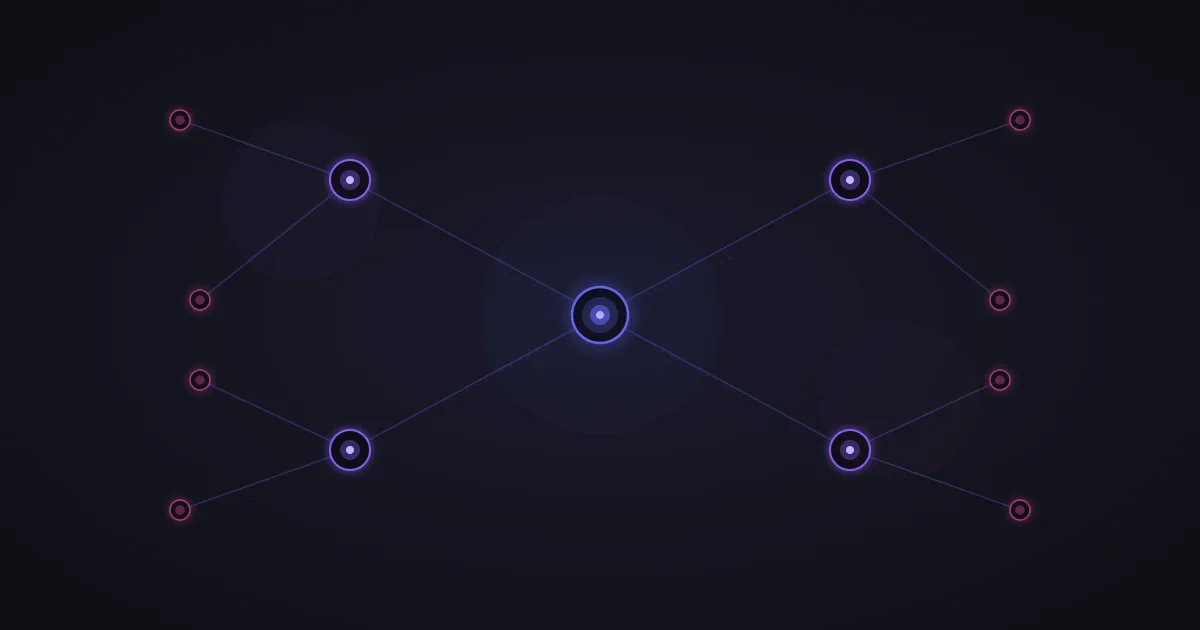
This isn't science fiction. It's what Sarnec agents do today. Each agent maintains a knowledge graph — an interconnected web of facts, decisions, and context — that persists across every conversation and task.
Memory as a Team Multiplier
The real power of persistent memory emerges when multiple agents work together. In a team of Sarnec agents, the marketing officer remembers the brand guidelines the CEO established last quarter. The developer knows which architectural patterns the CTO approved. The operations agent recalls which vendor contracts are up for renewal.
This shared context is what transforms a collection of individual agents into a functioning team. Without it, you don't have an AI workforce — you have a room full of strangers who forget each other's names every hour.
Building for Memory-First
If you're evaluating AI agent platforms, here's what to look for:
- Automatic knowledge retention — Agents should learn from their work without manual configuration. No one should have to tell an agent to "remember this."
- Cross-session continuity — An agent should pick up where it left off, regardless of how much time has passed.
- Shared team memory — Agents working together should have access to shared context, not just their own isolated history.
- Memory governance — You should control what agents remember and what they don't. Sensitive information needs proper handling.
The difference between a tool and a team member is memory. Tools do what you tell them. Team members build on what they know.
AI agents without memory will always be tools — useful, but limited. Agents with persistent memory become team members — capable of growth, adaptation, and compounding value over time.
That's the future Sarnec is building. Not smarter prompts, not bigger models — agents that remember, learn, and deliver like the best people on your team.
See memory-first agents in action
Book a demo to see how Sarnec agents retain context, learn from outcomes, and work as a real team.
Book a Demo
← Back to Blog
News Roundup
May 1, 2026
6 min read
AI Agents Are Getting Wallets, Jobs, and Regulators
The past week confirmed what we've been saying at Sarnec: AI agents are no longer experimental curiosities — they're becoming economic actors. From Stripe handing them digital wallets to regulators scrambling to define oversight, the agentic era just shifted from "coming soon" to "happening now."
Stripe Gives AI Agents Their Own Wallets
Stripe launched Link, a digital wallet purpose-built for autonomous AI agents. The idea is straightforward: agents shopping and transacting on behalf of users need a payment identity. Link gives them one — no human in the loop for each purchase.
This is a massive signal. When the payments infrastructure layer starts building for agents as first-class customers, we've crossed a threshold. Agents aren't just answering questions anymore — they're spending money, making procurement decisions, and managing budgets.
An agent that can transact but can't remember what it bought last week is a liability, not an asset. Financial autonomy without persistent memory is a recipe for duplicate purchases and contradictory spending.
GPT-5.5: The Most Agentic Model Yet
OpenAI released GPT-5.5, which they're calling their most capable agentic model to date. The upgrade focuses on autonomous task execution — the model can plan, use tools, and carry out multi-step workflows with less hand-holding. The catch? API pricing doubled.
This pricing move tells us something important about the economics of agentic AI. As models become more capable of independent work, the cost per task goes up, not down. For enterprises running teams of agents around the clock, model costs become a real line item — making orchestration efficiency and agent coordination critical to ROI.
Regulators Flag Agent Control Gaps
Regulatory bodies are starting to ask pointed questions about who's responsible when AI agents act autonomously. The emerging consensus: current governance frameworks weren't designed for systems that make decisions, take actions, and interact with other systems independently.
This is exactly the governance gap Sarnec was built to address. Our agents operate under structured chains of command, with approval workflows, budget controls, and full audit trails. Every action an agent takes is traceable to a specific task, a specific run, and a specific decision chain. When regulators come knocking, you need receipts — and that starts with how your agents are orchestrated.
Anthropic Eyes $900B+ Valuation
Reports suggest Anthropic could close a funding round at a valuation exceeding $900 billion within two weeks. Whether or not you think that number is justified, it reflects the market's conviction that the AI infrastructure layer is worth betting on in a massive way.
For the agent ecosystem, this is fuel. More investment in foundational models means better capabilities for the orchestration layers built on top of them. At Sarnec, we're model-agnostic by design — our agents work with Claude, GPT, and others — so improvements at the model layer compound directly into better agent performance.
Meta's Business AI Hits 10M Weekly Conversations
Meta reported that its business AI platform now handles 10 million conversations per week. The scale is impressive, but it raises a question: what happens to all that context after each conversation ends?
If each of those 10 million conversations starts from scratch with no memory of previous interactions, businesses are leaving enormous value on the table. A customer who contacted support three times about the same issue shouldn't have to re-explain the problem each time. This is where persistent memory transforms a chat interface into a genuine business relationship.
The Takeaway
The headlines this week tell a clear story: AI agents are graduating from assistants to autonomous actors. They're getting financial tools, stronger capabilities, and regulatory attention. But capabilities without coordination, memory, and governance create more risk than value.
The companies that will lead the agentic era aren't the ones with the most powerful individual agents — they're the ones with the best orchestration. Agents that remember, coordinate, and operate within clear governance structures. That's not a future prediction. That's what Sarnec delivers today.
See memory-first agents in action
Book a demo to see how Sarnec agents retain context, learn from outcomes, and work as a real team.
Book a Demo